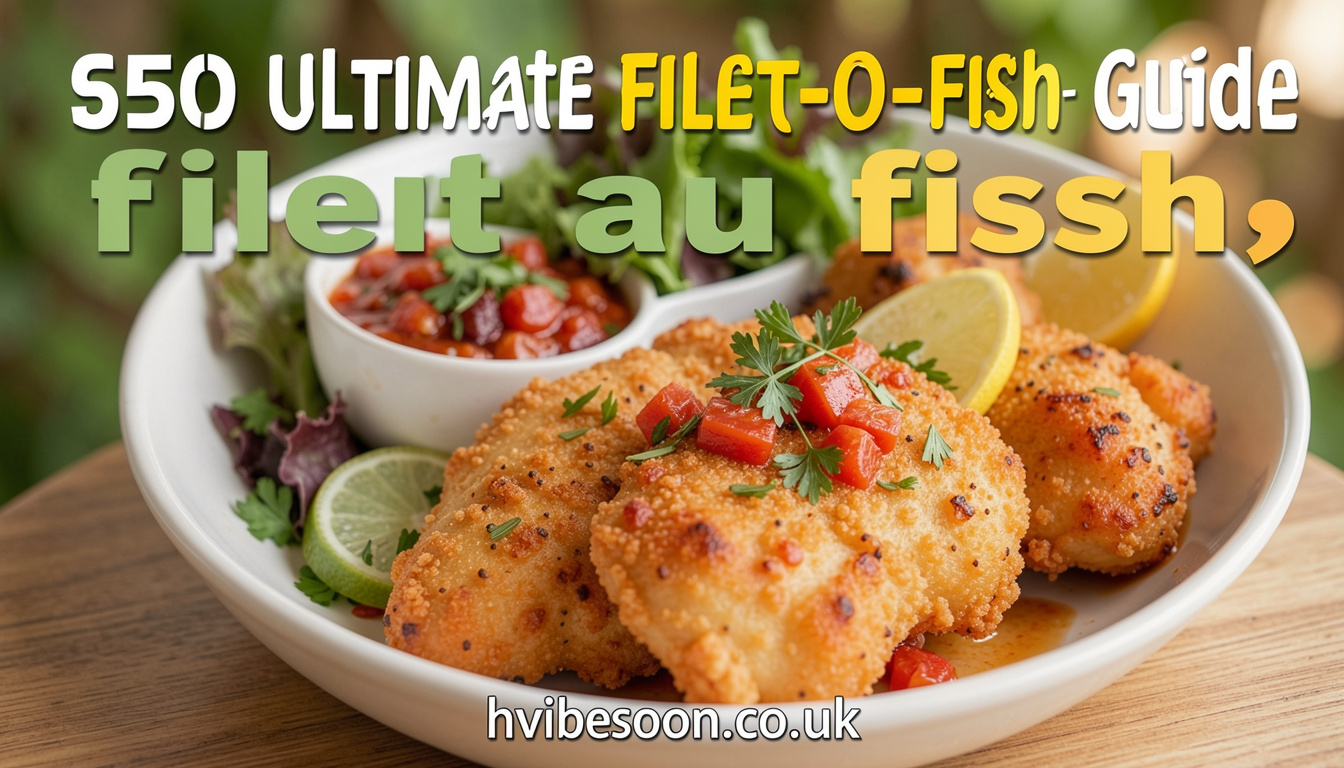
The filet au fish was actually the first non-hamburger menu item added to the world’s most famous fast-food chain. It was created by a franchise owner in Ohio back in the 1960s. He noticed that many of his customers did not eat meat on Fridays for religious reasons. To keep his business growing, he developed a delicious fish sandwich that could compete with the classic cheeseburger.
Since then, the filet au fish has become a global sensation. It proved that fast food could be diverse and cater to different needs. Today, millions of these sandwiches are sold every year. It is a testament to how a simple idea—providing a tasty seafood option—can change the fast-food industry forever. Even as menus change with new trends, this golden-brown delight remains a permanent and beloved fixture.
What Makes the Filet-O-Fish So Special?
The secret to a great filet au fish lies in its simplicity. Many people wonder why they crave it so often. The answer is the “mouthfeel.” You have a very soft, steamed bun that feels like a cloud. Inside that bun is a crispy, breaded fish square. The contrast between the soft bread and the crunchy fish is what makes it so addictive. It is a texture experience that most other sandwiches just don’t offer.
Another key factor is the consistency of the filet au fish. No matter which city or country you are in, you know exactly what you are going to get. The fish is always mild and never “fishy” in a bad way. It’s clean, salty, and satisfying. For many, it is the ultimate comfort food because it never surprises you with weird flavors—it just delivers exactly what it promises every single time.
Breaking Down the Ingredients
When you look closely at a filet au fish, you see four main components. First is the bun, which is uniquely steamed rather than toasted. This keeps it incredibly moist. Next is the fish patty, which is usually made from wild-caught Alaskan Pollock. This type of fish is chosen because it is sustainable and has a very light, flaky texture that holds up well when fried.
The third component is the tartar sauce. This isn’t just any mayo; it has bits of pickles and onions that add a tangy kick. Finally, there is the half-slice of American cheese. Have you ever wondered why it’s only a half-slice? It’s because the makers of the filet au fish felt a whole slice would overpower the delicate flavor of the fish. This attention to detail shows how much thought goes into balancing the flavors.
Is the Filet-O-Fish Sustainable?
Many modern diners care deeply about where their food comes from. Fortunately, the filet au fish has a great story here. Most major chains use fish that is certified as sustainable. This means they aren’t overfishing the oceans, ensuring that there will be plenty of fish for future generations. Choosing Alaskan Pollock is a smart move because it is one of the most well-managed fish populations in the world.
When you enjoy a filet au fish, you can feel a bit better knowing that the seafood is sourced responsibly. The companies often work with organizations like the Marine Stewardship Council (MSC) to track the fish from the ocean all the way to your tray. This level of transparency is important for building trust with customers who want to eat healthy and environmentally friendly meals.
The Science of the Steamed Bun
Have you ever noticed that the filet au fish bun is much smoother and shinier than a regular burger bun? That is because of the steaming process. Most burgers use toasted buns to handle the grease from the meat. However, since the fish patty is breaded and the sauce is creamy, a toasted bun would be too hard. The steam makes the bread soft enough to melt in your mouth alongside the fish.
This steaming technique is a hallmark of the filet au fish experience. It keeps the sandwich warm and ensures that the bun doesn’t crumble. If you were to try and recreate this at home, steaming the bun over a pot of boiling water for just 30 seconds would give you that authentic restaurant feel. It’s a small step that makes a massive difference in the overall quality of the meal.
Nutritional Value and Calories
If you are watching your diet, the filet au fish is often a lighter choice compared to double-patty beef burgers. On average, one sandwich contains about 380 to 390 calories. It provides a good amount of protein from the fish, which helps keep you full. While it is fried, it isn’t as heavy as a bacon-topped burger, making it a popular “middle ground” for people who want a treat without feeling overly stuffed.
However, keep in mind the sodium and the fats in the tartar sauce. Like any fast food, the filet au fish is best enjoyed as part of a balanced diet. If you want to make it even lighter, you can always ask for “light sauce” or skip the cheese. But for most fans, the full experience with all the toppings is exactly what they are looking for when they hit the drive-thru.
Why People Love the Tartar Sauce
The tartar sauce on a filet au fish is legendary. It provides the acidity needed to cut through the richness of the fried breading. Many people try to copy this recipe at home by mixing mayonnaise with relish, lemon juice, and a pinch of sugar. The sauce is what ties the whole sandwich together. Without that tangy zing, the fish might taste a bit plain.
The placement of the sauce is also important. Usually, it’s dolloped right on top of the fish patty so that it soaks into the breading slightly. This ensures that every single bite of your filet au fish has a burst of flavor. It is a masterclass in sauce-to-meat ratios. Even people who don’t usually like seafood often find themselves enjoying this sandwich because the sauce is so well-balanced.
Comparing Fish Sandwiches Across Brands
While one specific brand made the filet au fish famous, almost every fast-food chain now has their own version. Some use cod, while others use whiting or tilapia. Some offer “deluxe” versions with lettuce and tomato. However, the classic version remains the gold standard because it doesn’t try to be too fancy. It knows it is a simple, tasty fish square and it owns that identity.
When you compare them, you’ll notice that the filet au fish is usually smaller and more compact. This makes it easier to eat on the go. Other brands might have larger fillets, but they often lose the perfect ratio of bun-to-fish. If you are a true seafood lover, it’s fun to do a “taste test” of different brands, but you will likely find yourself coming back to the original for that nostalgia and consistent flavor.
How to Order a Fresh One Every Time
A pro-tip for any fan of the filet au fish is knowing how to get it served fresh. Because fish can dry out if it sits under a heat lamp for too long, you want yours straight out of the fryer. One trick is to ask for your sandwich “cook to order.” It might take an extra three minutes, but the difference in taste is worth the wait. The fish will be extra crunchy and the bun will be perfectly fluffy.
Another way to ensure freshness is to ask for a slight modification, like “no salt on the fish” or “extra tartar sauce.” This usually forces the kitchen to make a brand-new filet au fish just for you. There is nothing quite like the taste of a fresh fish patty that hasn’t lost its crispiness. It turns a standard fast-food meal into something that feels much more premium.
The Filet-O-Fish Around the World
Did you know the filet au fish looks different in other countries? In some places in Asia, they serve a “Double Filet-O-Fish” with two patties because the customers love the fish so much. In parts of Europe, the tartar sauce recipe might be slightly more herb-heavy to match local tastes. It is fascinating to see how one sandwich can be adapted to fit different cultures while keeping its core identity.
Even with these small changes, the filet au fish remains a universal language. You can walk into a restaurant in Tokyo, Paris, or New York and see people enjoying the same golden-brown square. It bridges the gap between different cuisines. It proves that a well-made, simple fish sandwich has a global appeal that transcends borders.
Conclusion
In a world where fast-food menus are constantly changing, the filet au fish stands as a symbol of consistency and simple joy. It doesn’t need flashy marketing or ten different toppings to be great. It relies on the quality of its fish, the fluffiness of its bun, and that one-of-a-kind sauce. Whether you are eating it for a quick Friday lunch or as a late-night snack, it always hits the spot.
The next time you are at the counter, give the filet au fish a second look. It is a piece of culinary history that helped shape how we eat today. With its sustainable sourcing and unique texture, it remains a smart and delicious choice for anyone. So go ahead, enjoy that crispy, tangy, and soft goodness—you deserve a classic treat!
FAQs
1. Why does the filet au fish only have a half-slice of cheese?
The half-slice is used to ensure the cheese doesn’t overpower the mild flavor of the Alaskan Pollock. It provides just enough creaminess without making the sandwich too salty or heavy.
2. What kind of fish is used in a filet au fish?
Most major restaurants use Alaskan Pollock. It is a white, flaky fish that is mild in flavor and is usually sourced from sustainable fisheries in the North Pacific.
3. Is the bun on the fish sandwich different from burger buns?
Yes! The filet au fish bun is steamed rather than toasted. This gives it a much softer, smoother, and “pillowy” texture compared to the slightly charred buns used for beef burgers.
4. Can I order a filet au fish if I have a dairy allergy?
The standard sandwich comes with a slice of American cheese and tartar sauce (which contains eggs and sometimes dairy derivatives). You can order it “plain” without cheese or sauce, but check the local allergen guide for the bun ingredients.
5. Is the filet au fish healthy?
Compared to many large burgers, it is lower in calories and provides a good source of protein. However, because it is deep-fried and contains tartar sauce, it should be eaten in moderation as part of a varied diet.
6. Why is the fish patty always square?
The square shape is a result of how the fish is processed. To ensure every customer gets the same amount of fish and to reduce waste during production, the fillets are pressed into blocks and then cut into perfect squares.
About the Author